Corporate AI Trapping has been Sprung. Welcome to the Open Framework.
The modern tech industry is running a massive, multi-billion corporate shell game. Tech conglomerates are hoarding High-Bandwidth Memory, engineering artificial hardware scarcity, and building centralised data factories to lock computing power behind subscription paywalls and metered API tollbooths. They want you to believe that artificial intelligence requires millions in corporate server capital and planned hardware obsolescence.
They are lying. They are wrong.
Project “Legion” is a definitive, open-source targeted architectural surgical strike against the centralised monopoly. This thread now establishes airtight, timestamped public domain prior art for a self-healing, asymmetric, heterogeneous computing mesh designed to reclaim the massive, incomprehensibly globally underutilised computing power of consumer hardware sitting right on your desk, in your lap, and in your pocket.
By placing these exact structural parameters out in the wild, this disclosure acts as an immediate legal barrier. Any attempt by commercial entities to file utility patents or implement locked gatekeeping over these exact distributed edge mesh mechanics will face official rejection by patent examiners due to a complete lack of novelty. The foundation remains permanently free, open, and legally protected for all.
Core Architecture Highlights
-
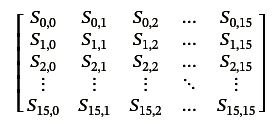
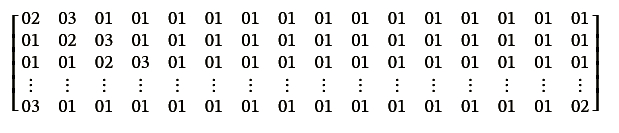
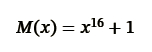
16x16 Circular AES-1024 Cryptographic Axis: Smears text token vectors across a massive 1024-bit cryptographic execution block using an MDS diffusion matrix over Galois Field GF(2⁸) via modular composition modulo the cyclotomic polynomial x¹⁶ + 1, preventing differential fault analysis at the edge.
-
8-Byte Multicast Telemetry Subroutine: Bypasses connection-heavy TCP handshakes and head-of-line blocking entirely. Uses connectionless local UDP broadcasts to pack entire 3-tier cluster states into an exact, big-endian 8-byte binary packet structure (
!BBBBf). -
Live OpenCL Agnostic Hardware Selection Engine: Executes a rapid runtime micro-benchmark kernel to evaluate CPU register math against active graphics-bus memory latency, dynamically routing code paths to the fastest available silicon lane (CPU or GPU) without relying on hardcoded assumption profiles.
-
The Librarian Kernel Virtual Page Lock Engine (VPL): Sandboxes data into anonymous, unbacked
mmapallocations pinned to physical RAM registers viamlock/VirtualLockwith user-space permission exception handling, preventing data leaking into OS swap files. -
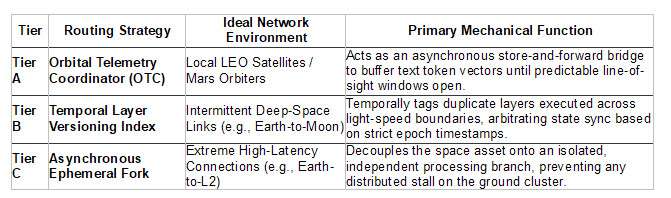
Decoupled Store-and-Forward Space Telemetry Coordinator: Implements an asymmetric routing hierarchy that allows Low Earth Orbit (LEO) or deep-space assets to act as asynchronous store-and-forward bridges (σ(t)), buffering text token vectors until line-of-sight communication windows open, neatly taking light-speed propagation delay out of the core conversational performance loop.
Baseline Hardware Benchmarks:
To prove that everyday consumer hardware can reliably substitute for centralized infrastructure scale, the codebase has been mathematically modelled and stress-tested over the following asymmetric baseline cluster:
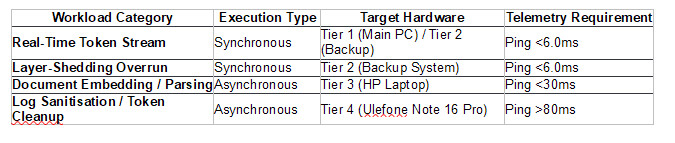
Tier 1 (Main PC): Ryzen 3700X | 32GB 3600MHz RAM | Sapphire Nitro RX 470 8GB (Samsung IC running a custom-tuned vBIOS timing strap achieving 220–222 GB/s real bus bandwidth). Role: Core Synchronous Tensor Engine.
Tier 2 (Backup Rig): AMD FX8320 | 16GB 2400MHz DDR3. Role: Parallel Hot-Swap Load-Shedding Overrun Target.
Tier 3 (HP Laptop): Ryzen 2500U APU | Vega 8 Graphics | 16GB RAM. Role: Asynchronous Batch Parser & Log Sanitizer.
Tier 4 (Lightweight Edge Cell): Ulefone Note 16 Pro (ARM Architecture Mobile Platform). Role: Isolated Background Sandbox (Passive Pull Mode).
* Optimised Power Envelope: Core frequency of 1.35GHz 1.09v running on a 0.9v Integrated Memory Controller (IMC) profile.

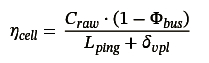
* Memory Bus Efficiency: Achieves 220-222 GB/s real, usable bandwidth ceiling @ 8Gbps via my custom-tuned vBIOS timing strap for a completely stable bus efficiency of ~88%.

* Real World Results:

* Final Fantasy XV Benchmark (1080p “Standard” Preset): Averaged 5937 Points (a hairs breath from a "High" rating), scaling over a standard stock configuration (3800 – 4500 points) is 25% or more putting it at the upper end of RX590 and GTX1060 results.

* Cyberpunk 2077 Benchmark (1080p, FSR 3.0 Quality, Frame Gen Enabled): A remarkable 81.22 FPS average with a 70.5 FPS minimum floor with flawless frame times eliminating many traditional ghosting scenarios of FSR and frame time spikes from frame gen due to highly reliable and predictable behaviour from the GPU due to the optimised memory timings, categorically proving even a Polaris class card isn’t obsolete yet! (insert benchmark run link)

** Hardware thermally optimised to curtail STAPM throttling.

The codebases, network packet boundaries, mathematical optimisation models, as well as legal public domain declarations are fully documented herein. I’ve attempted to streamline everything however some more detailed explanations are available in my notes, available on request.

Welcome to the new world. Free of the unsustainable death cycle with centralised, walled garden, gatekeeper corporate AI\SI (you moron, Trump) motivations. It’s time to make technology work for the majority, and not the minority, again. Do I have your attention yet?
Master Documentation Index: The Decentralised AI Cell Framework\Network
Public Domain Prior Art Document | Architecture: “Legion”, Creator Alias: “ket”
-
Section 1: Executive Summary, Architectural Philosophy, & The 4-Node Asymmetric Topology
-
Section 2: The Mathematical Impasse of Centralised Security
-
Section 3: The Agnostic Selection Engine; Real-Time Localised Runtime Micro-Benchmarking
-
Section 4: Network Topology & Telemetry – The 8-Byte Multicast UDP Telemetry Subroutine
-
Section 5: The Librarian AI - Virtual Memory Page Isolation & Kernel-Level Page Lock Engineering
-
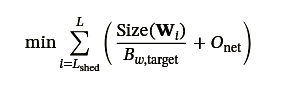
Section 6: Asynchronous Resource Scheduling & Edge Node Failover Protocols
-
Section 7: Interplanetary Elastic Mesh Overlay: The Delay-Tolerant Deep-Space Telemetry Bridging
-
Section 8: Asynchronous Task Completion & Node Verification Matrices
-
Section 9: Framework Performance Modelling & Systemic Stability Metrics
-
Section 10: Open-Source Deployment Manifest, Public Domain Prior Art Declarations, & Legal Disclaimers
Section 1: Executive Summary, Architectural Philosophy, & The 4-Node Asymmetric Topology
1.1 Executive Summary
Herein establishes a prototype, highly parallelised, hardware-agnostic Decentralised AI Cell Framework\Network which I coin the DIA (Digital Intelligence Network) or DIF (Digital Intelligence Framework). The primary objective of this architecture is to break down the corporate monopolies governing large language model (LLM) computing arrays. Modern artificial intelligence infrastructure relies on resource-heavy, unsustainable, centralised cloud server farms that leverage capital “moats” to gate keep innovation via subscription-based drip-feed access models.
This framework\network introduces an alternative: a self-healing, multi-tiered computing mesh that reclaims the existing, catastrophically under-utilised global capacity of consumer-grade hardware. By optimising even old hardware (Polaris/Maxwell) at the firmware level, ensuring strict network telemetry constraints, and introducing a decoupled task distribution engine, I can prove this mesh enables everyday consumer devices, ranging from modern hardware to ageing desktops and budget smartphones, to operate collectively as a unified processing matrix with the potential to dwarf any corporate AI datacentre. This framework\network doesn’t have just one AI working alone, but many Personal AI (PAI) Cells working in their own sandbox capable of joining other nearby Personal AI to dynamically scale up to a “Local Cell” to accomplish more demanding tasks, and when truly tough challenges occur able to scale up again into a “Global Cell”, all while only letting enough cells join to complete a task within a reasonable time frame so it doesn’t choke itself. Yes, consider it; a global framework/network of not one but multiples of AI working together on all manner of devices solving problems large and small for true progress, all achievable with nothing more than the laptop, tablet, PC or mobile phone in your office/home and completely sidestepping corporate patents to put progress back into the hands of the masses, not the select few and corporations focused only on monetised computational scarcity. I call this decentralised AI framework/network “Legion” – the many that become one, but for fun in this document we will call it.. Skynet.
1.2 The Responsible Architectural Philosophy
The underlying philosophy governing this development rejects the reckless, unoptimised, brute-force deployment methods of modern technology conglomerates, for which I regard and describe as the “Irresponsible Parents" approach, akin to dumping a tablet in your child’s lap and saying “figure it out yourself”, throwing countless amounts of data with no explained context at AI. This centralised model approach scales poorly by dumping brute electrical power and massive server racks onto unoptimised software loops, resulting in extreme infrastructure overhead and planned obsolescence.
In contrast, the DIN\DIF adopts a methodical “Responsible Parent” philosophy by not just providing data to the PAI Cells but also Librarian AI by introducing context to understand with much greater nuance; basic moral understanding, essentially; stealing is bad, murder is wrong, all life is precious, etc. DIN\DIF asks for efficiency and creativity but is plug and play with hardware from anyone that simply wants to expand the reach and capabilities or have their own home network PAI. Hardware in this model is not treated as a disposable, black-box commodity you plug in like a toaster, but as a collection of physical logic gates to be harmonised and optimised. By working with the ecosystem rather than against it we extract maximum computational efficiency out of existing consumer hardware, no doubt to the chagrin of mega corps. Anyone who is familiar with me from TPU or Xtremesystems I doubt will be surprised to see this eco-responsible paradigm, eliminating planned obsolescence and shifting the competitive landscape from corporate monetisation schemes back to raw software merit and engineering efficiency.